-
September 23, 2025 Read More
On September 15, 2025, AAP submitted comments in response to a Request for Information on Maximizing Research Funds by Limiting Allowable Publishing Costs by the National Institutes of Health.
AAP continues to advocate that the best method for addressing issues of cost in publication is through a vibrant, competitive, and dynamic publishing marketplace with maximum author choice. Publishers are partners with scientists and doctors in the research process, working to ensure research integrity and boosting American innovation and discovery.
Models are now changing in the face of open access mandates, and AAP has analyzed the options put forth by NIH to identify the plan that will provide authors with maximum freedom to choose how to publish and communicate their work, while at the same time supporting the indispensable publication processes that deliver best-in-class, peer-reviewed articles.
Our full submission can be found here.
-
In our third installment of the PROSE Award Editors Series, we talked with Princeton University Press’ Anne Savarese, editor of The Chapter: A Segmented History from Antiquity to the Twenty-First Century, winner of the 2024 PROSE Award in the category of Literature. In this installment, Savarese takes us on a journey through the editorial process, illuminating how editors and authors craft academic books that resonate with widespread audiences. The conversation has been edited for brevity.
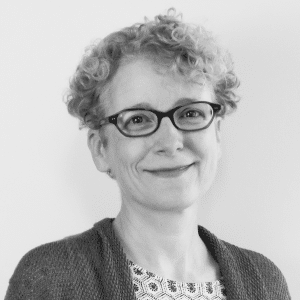
Anne Savarese is a publisher of literary studies at Princeton University Press, where she focuses on acquiring books about literature, including literary criticism and literary history; primary and biographical work; and new translations or editions of classics. Savarese is particularly interested in books on modern British and American literature, comparative literature, poetry and poetics, folklore and mythology, and language and media history.
Association of American Publishers: How do you view your role as editor?
Anne Savarese: The editor is the link between the author and the rest of the Press. Part of my role is bringing projects into the Press, and working closely with authors to ensure their books are the best they can be—and then to advocate for these books as they move through every stage of the publishing process. I work closely with authors and with my colleagues in the Press on the many different collaborations that go into crafting a book and getting it out into the world.
AAP: Can you describe the editorial process for a work like The Chapter: A Segmented History from Antiquity to the Twenty-First Century by Nicholas Dames, which earned a PROSE Award in 2024?
Savarese: This book was in the works for a long time. As Nicholas Dames got further into his research, he broadened the scope, and it became a book not only about how chapters have become integral parts of books from ancient times to now, but also about how chapters have shaped the history of the novel, the way we read, and the way we think about time.
The editorial process initially involved periodic conversations with Dames about the progress and development of the manuscript. Once the manuscript came in, I read through it and sent it out for peer review, and we were fortunate to have readers who gave the book an interested, critical, and constructive reading. I also made some editorial suggestions, but the manuscript was already very polished when it came in: the author had taken the time to realize his vision for it, and his revisions made it even stronger and more accessible to a broad audience.
AAP: How do you handle the balance between academic research and broader public appeal?
Savarese: When we sign books, we generally know who the intended audience is at the outset. This book was signed as what we call an “academic trade.” We expected the core audience to be academic, but also believed it would receive mainstream review attention and interest serious readers outside the academy.
When we think about audience, we ask, “Will the questions the book deals with interest a broad audience? Or are they questions primarily for the people who study the topics this book covers?” Dames is an esteemed literary scholar and a historian of the novel, as well as an editor for Public Books. He was able to write this book in a way that is accessible but grounded in serious scholarship.
AAP: Would you say this book crosses multiple scholarly fields, and does that affect who the audience is?
Savarese: There are many different directions a book about the chapter could have taken, but our author is a literature scholar, so it takes a literary turn. This book is squarely in the category of literature, but it spans many historical periods, covering elements of book history, the history of knowledge, the history of the novel, and related subjects.
It takes a broad approach to a literary topic in ways that would interest people outside of academia. They don't have to be subject specialists to engage with the arguments and research that Dames is presenting.
AAP: What makes the PROSE Awards stand out in the landscape of academic and professional publishing?
Savarese: The PROSE Awards are unique because they are judged by experts and our peers in scholarly and professional publishing who appreciate the effort that goes into these books, whether they are specialized academic or trade books. Recognition means a lot coming from people who really know what goes into creating and publishing books like these.
Entries for the 2025 PROSE Awards are currently being accepted here until midnight on November 25, 2024. For more information on the 2025 PROSE Awards, please visit our website or email proseawards@publishers.org.
-
For the second installment of our PROSE Award Editors Series, we speak with Harvard University Press’ Joseph Pomp, editor of A Myriad of Tongues: How Languages Reveal Differences in How We Think by Caleb Everett, winner of the 2024 PROSE Award in the category Language and Linguistics, and Sovereign Funds: How the Communist Party of China Finances Its Global Ambitions by Zongyuan Zoe Liu, winner of the 2024 PROSE Award in the category Business, Finance, and Management.
During the interview, Pomp gives insight into the editorial process, the collaborative editor-author relationship, and how editors meet the needs of potential readers. The conversation has been edited for brevity.
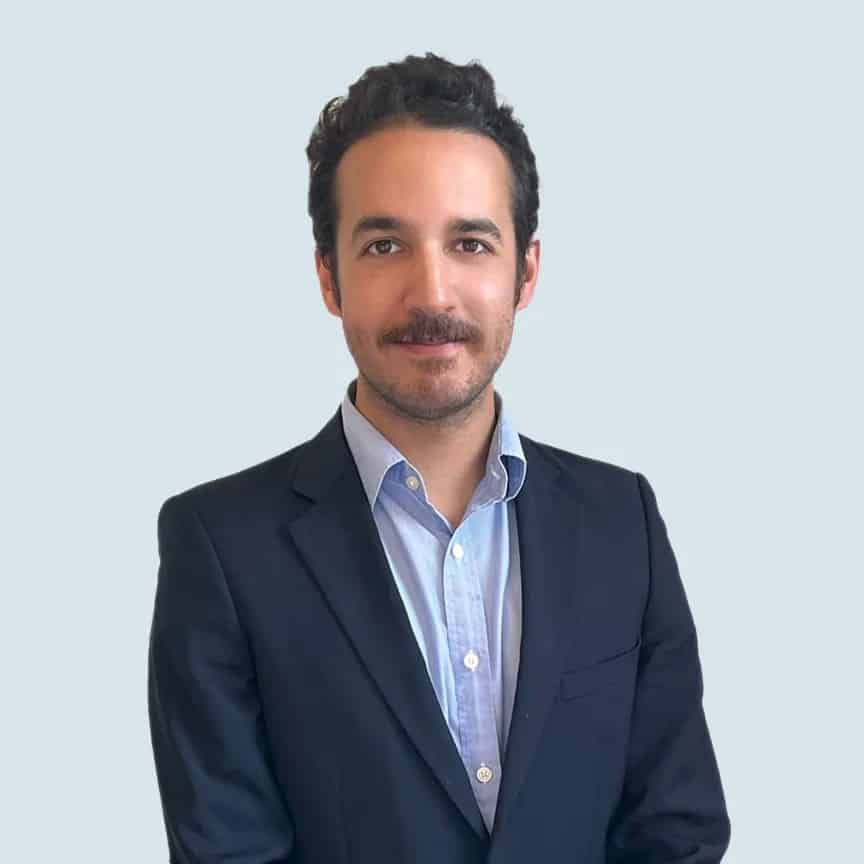
Joseph Pomp is an editor at Harvard University Press, focusing on books that break new ground in politics, critical theory, and cultural studies as well as those that offer original viewpoints on current events.
Association of American Publishers: How do you view your role as editor?
Joseph Pomp: I think of myself as the champion of the books I take on in our house and the wider world, once they have been published. I’m advocating for my authors before we've even put their books under contract. Then, throughout every step of the publication process, I'm working closely with my authors. On the page, this includes developing their ideas, refining the structure and argumentation, and coming up with titles for chapters, chapter sections, and the book itself.
I'm happiest when I feel like a meaningful collaborator with them.
AAP: To follow that point, do you have a favorite component of the editor-author relationship?
Pomp: What stands out to me is when I'm getting into the weeds with an author, when we're fine-tuning an argument. I often have long phone calls with authors where we're playing ping-pong with an idea. It's an iterative process, figuring out exactly how an idea should be presented, and I love that nitty-gritty.
AAP: What challenges do you typically encounter when editing works that cross multiple fields of study?
Pomp: One of the biggest challenges is satisfying experts in a given field while not losing the attention and interest of the elusive general reader that we're often after. It’s always a balancing act of maintaining scholarly rigor while also making the work approachable so non-specialist readers can follow it.
AAP: Following your insights into potential readers, do you feel that your audience is wider than the scholarly space alone?
Pomp: We want our books to appeal to their anticipated audience, people already studying that topic or adjacent ones, but we are hopeful that they also resonate with intellectually curious readers around the world. I want to emphasize that we are not just publishing books in the U.S. One of the books that won a 2024 PROSE Award, Caleb Everett's book, is going to appear in at least five languages.
And we don't only publish books originating in English. I'm doing a lot of books where I'm commissioning a translation into English. We're publishing both the best of English-language scholarship, and the best of scholarship in other languages that we're introducing to the English-speaking world.
AAP: In your opinion, what qualities contribute to a scholarly publication making a strong impact in its field?
Pomp: I think that there are two kinds of scholarly books that can have a lasting impact on the field. There are those that offer revelatory scholarship, and many of our most celebrated books definitely fall into that camp. But we also publish books that I think have made a lasting impact in the scholarly world, that synthesize work that has already been done, and bring that work together, making it a little bit more accessible, perhaps, to an undergraduate who wouldn't be able to follow the more technical version published for other scholars. Those books are truly impactful because they become books that are taught in courses, and they shape the way that people think about a given field.
AAP: What makes the PROSE Awards stand out in the landscape of academic and professional publishing?
Pomp: In celebrating the work of scholarly and professional book publishers, the PROSE Awards are a unique opportunity to celebrate the work we're doing year-round on books that are advancing scholarship. Awards are very meaningful to our authors as much as to us, and awards like PROSE encourage us all to continue doing the work that we do.
Entries for the 2025 PROSE Awards are currently being accepted here until midnight on November 18, 2024. For more information on the 2025 PROSE Awards, please visit our website or email proseawards@publishers.org.
-
As entries for the 2025 PROSE Awards continue to pour in, we begin our first piece in a series of conversations with editors of PROSE Award-winning works, who give us insight into the process behind editing professional and scholarly books and the value that the PROSE Awards bring to the scholarly publishing community.
This week, we spoke with Ruth Lane, editor of Getty Publications’ Liberated: The Radical Art and Life of Claude Cahun, the 2024 PROSE Award winner in the category of Nonfiction Graphic Novels. Throughout our conversation, Lane highlights the unique characteristics of scholarly graphic novels and illustrates their significant role in scholarly and professional publishing. The conversation has been edited for brevity.
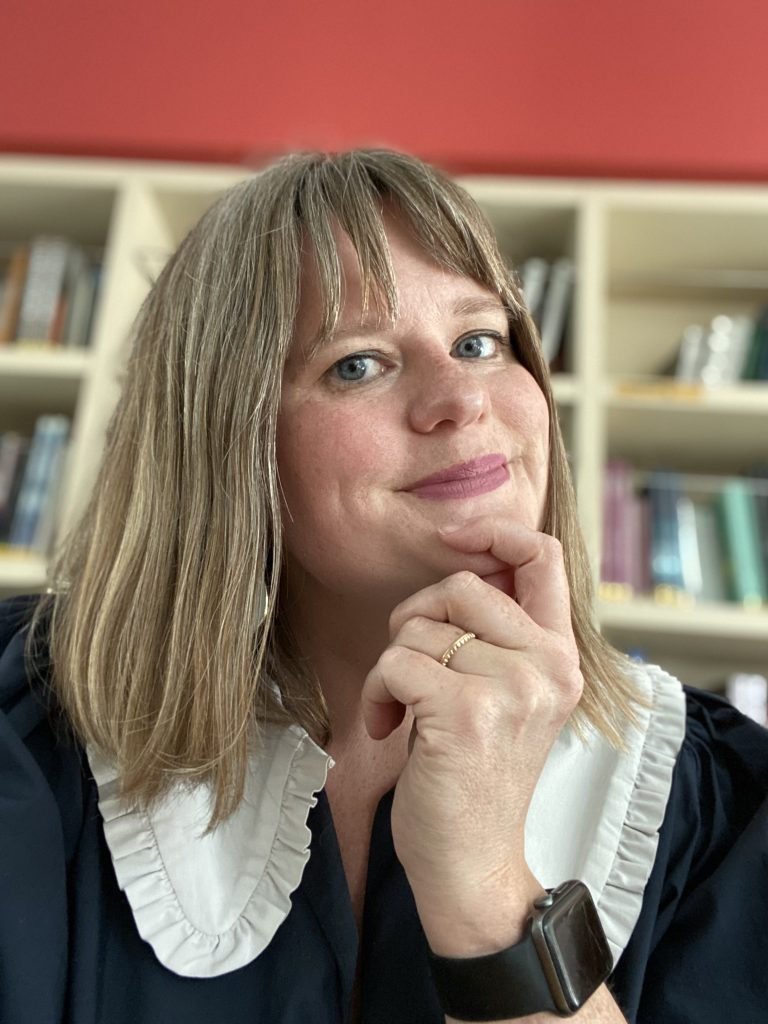
Ruth Evans Lane is a senior editor at Getty Publications, where she’s worked for over fifteen years. She develops and edits print and digital books about a variety of art topics, from scholarly tomes on bronze conservation to graphic biographies of artists for young adults.
Association of American Publishers: How do you view your role as an editor, and how do you view the relationship that you have with your authors?
Ruth Lane: I would say that my role as an editor is to make the best book possible under myriad restraints. The sky is never the limit, so we are always trying to figure out how we can do things within certain parameters.
Getty Publications is structured differently than traditional publishers in that I serve as both the acquiring editor for projects like Liberated [2024 PROSE Award winner in the category of Nonfiction Graphic Novels] but also the project manager and project editor for the book. So, I am with the book from the beginning. But even though this project came out of an idea I had—to make a graphic biography of Claude Cahun—it is Kaz Rowe’s [the book’s author and illustrator] book; their name is on the cover. They turned that glimmer of an idea into a book. So, I think my role as an editor is to facilitate the author’s work while also making sure you get the best book out of the process.
AAP: How is the process for editing a graphic novel different than for the traditional scholarly or art exhibition books that you are working on?
Lane: It’s different in so many ways, but then, all the projects that I work on are really different from each other, even if they are two exhibition catalogs. I work on scholarly books, like all the editors of PROSE titles, but I am never a subject matter expert in any of the material that I'm editing. In a sense, I am always learning how to be the best editor for a project, and I'm always learning new disciplines.
AAP: In your opinion, what are the qualities that you think make a scholarly work truly impactful in its respective field?
Lane: I think for graphic novels and for works aimed at young audiences, you have to be able to distill the concept. For books that are going to cross over and reach different types of audiences, they generally need a narrative hook. For Liberated, we have an incredible artist like Claude Cahun, whose work dovetails so nicely with the way young people use social media to construct personas. The way people talk about social interactions, like code switching or masking, are very familiar to audiences today, and are a major part of Cahun’s work.
AAP: Do you feel this is a crossover work? Is it aimed at young people, or mostly the scholarly publishing world?
Lane: My primary audience is high schoolers who like photography or are interested in gender expression. That is where I'm looking for my first audience, but audiences ripple out from each other, and they overlap. I want people who know a lot about Cahun to be interested in this book, and we worked closely with Tirza Latimer, one of the major scholars of Cahun, to make sure that everything was accurate. I do think it's of interest to scholars, and if you're thinking about it as a scholarly book, yes, it's art history, but it's also Jewish history. It's Queer history. It's World War II history. There are a lot of intersecting fields.
AAP: In what ways do the PROSE Awards help foster innovation and bring recognition to works in scholarly fields?
Lane: When you look at the PROSE Awards winners, they intersect broadly with numerous fields and tend to be books that are engaging to read for both readers and scholars. It's exciting to have a book chosen for a PROSE Award because I feel like it tells you that the book is not only making a true scholarly contribution, but it's doing it in a way that is accessible and innovative.
Entries for the 2025 PROSE Awards are currently being accepted here until midnight on November 18, 2024. For more information on the 2025 PROSE Awards, please visit our website or email proseawards@publishers.org.
-
April 26, 2024 Read More

