
November 20, 2024
PROSE Award Editors Series: Anne Savarese
In our third installment of the PROSE Award Editors Series, we talked with Princeton University Press’ Anne Savarese, editor of The Chapter: A Segmented History from Antiquity to the Twenty-First Century, winner of the 2024 PROSE Award in the category of Literature. In this installment, Savarese takes us on a journey through the editorial process, illuminating how editors and authors craft academic books that resonate with widespread audiences. The conversation has been edited for brevity.
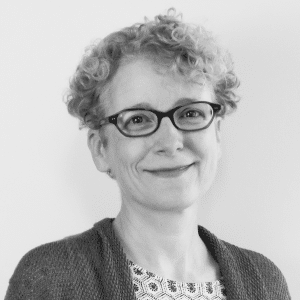
Anne Savarese is a publisher of literary studies at Princeton University Press, where she focuses on acquiring books about literature, including literary criticism and literary history; primary and biographical work; and new translations or editions of classics. Savarese is particularly interested in books on modern British and American literature, comparative literature, poetry and poetics, folklore and mythology, and language and media history.
Association of American Publishers: How do you view your role as editor?
Anne Savarese: The editor is the link between the author and the rest of the Press. Part of my role is bringing projects into the Press, and working closely with authors to ensure their books are the best they can be—and then to advocate for these books as they move through every stage of the publishing process. I work closely with authors and with my colleagues in the Press on the many different collaborations that go into crafting a book and getting it out into the world.
AAP: Can you describe the editorial process for a work like The Chapter: A Segmented History from Antiquity to the Twenty-First Century by Nicholas Dames, which earned a PROSE Award in 2024?
Savarese: This book was in the works for a long time. As Nicholas Dames got further into his research, he broadened the scope, and it became a book not only about how chapters have become integral parts of books from ancient times to now, but also about how chapters have shaped the history of the novel, the way we read, and the way we think about time.
The editorial process initially involved periodic conversations with Dames about the progress and development of the manuscript. Once the manuscript came in, I read through it and sent it out for peer review, and we were fortunate to have readers who gave the book an interested, critical, and constructive reading. I also made some editorial suggestions, but the manuscript was already very polished when it came in: the author had taken the time to realize his vision for it, and his revisions made it even stronger and more accessible to a broad audience.
AAP: How do you handle the balance between academic research and broader public appeal?
Savarese: When we sign books, we generally know who the intended audience is at the outset. This book was signed as what we call an “academic trade.” We expected the core audience to be academic, but also believed it would receive mainstream review attention and interest serious readers outside the academy.
When we think about audience, we ask, “Will the questions the book deals with interest a broad audience? Or are they questions primarily for the people who study the topics this book covers?” Dames is an esteemed literary scholar and a historian of the novel, as well as an editor for Public Books. He was able to write this book in a way that is accessible but grounded in serious scholarship.
AAP: Would you say this book crosses multiple scholarly fields, and does that affect who the audience is?
Savarese: There are many different directions a book about the chapter could have taken, but our author is a literature scholar, so it takes a literary turn. This book is squarely in the category of literature, but it spans many historical periods, covering elements of book history, the history of knowledge, the history of the novel, and related subjects.
It takes a broad approach to a literary topic in ways that would interest people outside of academia. They don’t have to be subject specialists to engage with the arguments and research that Dames is presenting.
AAP: What makes the PROSE Awards stand out in the landscape of academic and professional publishing?
Savarese: The PROSE Awards are unique because they are judged by experts and our peers in scholarly and professional publishing who appreciate the effort that goes into these books, whether they are specialized academic or trade books. Recognition means a lot coming from people who really know what goes into creating and publishing books like these.
Entries for the 2025 PROSE Awards are currently being accepted here until midnight on November 25, 2024. For more information on the 2025 PROSE Awards, please visit our website or email proseawards@publishers.org.