
November 8, 2024
PROSE Award Editors Series: Joseph Pomp
For the second installment of our PROSE Award Editors Series, we speak with Harvard University Press’ Joseph Pomp, editor of A Myriad of Tongues: How Languages Reveal Differences in How We Think by Caleb Everett, winner of the 2024 PROSE Award in the category Language and Linguistics, and Sovereign Funds: How the Communist Party of China Finances Its Global Ambitions by Zongyuan Zoe Liu, winner of the 2024 PROSE Award in the category Business, Finance, and Management.
During the interview, Pomp gives insight into the editorial process, the collaborative editor-author relationship, and how editors meet the needs of potential readers. The conversation has been edited for brevity.
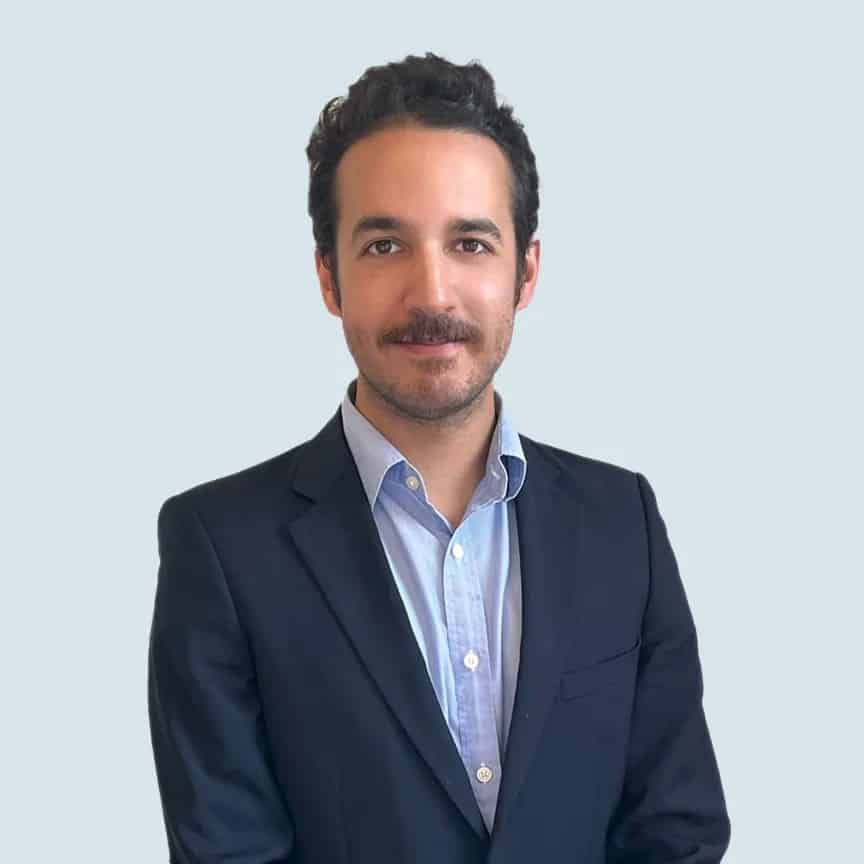
Joseph Pomp is an editor at Harvard University Press, focusing on books that break new ground in politics, critical theory, and cultural studies as well as those that offer original viewpoints on current events.
Association of American Publishers: How do you view your role as editor?
Joseph Pomp: I think of myself as the champion of the books I take on in our house and the wider world, once they have been published. I’m advocating for my authors before we’ve even put their books under contract. Then, throughout every step of the publication process, I’m working closely with my authors. On the page, this includes developing their ideas, refining the structure and argumentation, and coming up with titles for chapters, chapter sections, and the book itself.
I’m happiest when I feel like a meaningful collaborator with them.
AAP: To follow that point, do you have a favorite component of the editor-author relationship?
Pomp: What stands out to me is when I’m getting into the weeds with an author, when we’re fine-tuning an argument. I often have long phone calls with authors where we’re playing ping-pong with an idea. It’s an iterative process, figuring out exactly how an idea should be presented, and I love that nitty-gritty.
AAP: What challenges do you typically encounter when editing works that cross multiple fields of study?
Pomp: One of the biggest challenges is satisfying experts in a given field while not losing the attention and interest of the elusive general reader that we’re often after. It’s always a balancing act of maintaining scholarly rigor while also making the work approachable so non-specialist readers can follow it.
AAP: Following your insights into potential readers, do you feel that your audience is wider than the scholarly space alone?
Pomp: We want our books to appeal to their anticipated audience, people already studying that topic or adjacent ones, but we are hopeful that they also resonate with intellectually curious readers around the world. I want to emphasize that we are not just publishing books in the U.S. One of the books that won a 2024 PROSE Award, Caleb Everett’s book, is going to appear in at least five languages.
And we don’t only publish books originating in English. I’m doing a lot of books where I’m commissioning a translation into English. We’re publishing both the best of English-language scholarship, and the best of scholarship in other languages that we’re introducing to the English-speaking world.
AAP: In your opinion, what qualities contribute to a scholarly publication making a strong impact in its field?
Pomp: I think that there are two kinds of scholarly books that can have a lasting impact on the field. There are those that offer revelatory scholarship, and many of our most celebrated books definitely fall into that camp. But we also publish books that I think have made a lasting impact in the scholarly world, that synthesize work that has already been done, and bring that work together, making it a little bit more accessible, perhaps, to an undergraduate who wouldn’t be able to follow the more technical version published for other scholars. Those books are truly impactful because they become books that are taught in courses, and they shape the way that people think about a given field.
AAP: What makes the PROSE Awards stand out in the landscape of academic and professional publishing?
Pomp: In celebrating the work of scholarly and professional book publishers, the PROSE Awards are a unique opportunity to celebrate the work we’re doing year-round on books that are advancing scholarship. Awards are very meaningful to our authors as much as to us, and awards like PROSE encourage us all to continue doing the work that we do.
Entries for the 2025 PROSE Awards are currently being accepted here until midnight on November 18, 2024. For more information on the 2025 PROSE Awards, please visit our website or email proseawards@publishers.org.